
Alcohol and firearms are a dangerous mix. That’s the straightforward logic behind Vermont’s House Bill H.45. The bill prohibits firearms in establishments that serve alcohol for on-site consumption. On paper, it feels like common sense: keep guns out of bars, reduce the chance of alcohol-fueled violence.
But the more I sat with the text of this bill, the more I realized something: laws that feel obvious aren’t always that simple. They can carry unintended consequences, especially when they affect people’s rights and safety in complex, real-world environments.
This is where I decided to experiment. Instead of just reading the bill and forming an opinion, I ran it through an AI. Not because I think machines should write our laws, but because AI can act like a thought partner—poking at assumptions, surfacing blind spots, and helping us ask better questions.
What follows isn’t a takedown of H.45. It’s a journey: from understanding the bill’s intent, to exploring its gaps, to imagining what a more flexible, data-driven alternative might look like. My hope is that readers walk away not with “the answer,” but with a sense of how open-minded dialogue—and yes, even AI—can make legislation stronger.
The Bill in Plain Language
H.45 is short and direct: no firearms allowed in any business that serves alcohol for on-site drinking. This ban applies not only to patrons, but also to employees. The only exception is for the owner of the business, who may carry if they choose.
On its face, the law is about preventing bar fights or intoxicated disputes from escalating into shootings. But the details matter. A bartender working a late-night shift, a server closing down after midnight, or a bouncer dealing with unruly guests—all of them would be barred from carrying a firearm for protection. The owner has a choice, but the people most exposed to late-night risks do not.
That’s the crux of the issue. The law’s intent is safety. But its structure creates uneven application.
The Unintended Consequences
Here’s where things get messy:
- Employees lose the right to self-defense. Many bars, clubs, and restaurants close late at night. Parking lots are dark. Tempers run hot. Employees walking to their cars—or breaking up a fight—would have fewer tools to protect themselves.
- Unequal rules between owners and staff. An owner behind the counter could carry. The bartender beside them could not. That’s not just inconsistent—it raises questions about fairness and liability.
- Enforcement gray areas. What about off-duty law enforcement? What about a concealed carry permit holder who works as a part-time DJ? The bill doesn’t clearly address these scenarios.
Anyone who’s worked in or around nightlife knows: customers aren’t the only risk. Sometimes the scariest moment isn’t inside the bar—it’s the walk to your car after closing.
That’s where H.45, despite its good intentions, feels overly blunt.
How AI Enters the Picture
I’ve been testing how AI tools can help unpack legislation. With H.45, I fed the bill text into a large language model and asked: “What weaknesses or unintended consequences might this law create?”
The AI didn’t spit out an answer like a magic 8-ball. Instead, it asked back: “How would this law affect employees who leave late at night? Would the restriction increase their vulnerability? How would enforcement distinguish between owners and staff?”
That’s the real power of AI in this context—not giving answers, but generating smarter questions. Questions legislators, journalists, or citizens might not surface on their own.
I don’t believe AI should replace human debate. But I do believe it can sharpen it.
Alternative Path: Data-Driven Restrictions
So, what might a more balanced version of this law look like? Using AI to help brainstorm, I started sketching out an alternative:
- Risk-based bans. Instead of a blanket prohibition, target establishments with repeat violent incidents or high police call volumes. Why punish a quiet family tavern the same as a nightclub with weekly brawls?
- Event-based bans. Give local authorities the power to impose temporary restrictions during high-risk times—like holiday weekends, major sporting events, or tourist surges.
- Employee carve-outs. Allow owners to designate specific staff (bartenders, managers, security) who can carry if properly licensed. That keeps protection on-site without making the space an open-carry free-for-all.
- Voluntary program with incentives. Businesses that opt into a no-firearms policy could receive state-backed insurance benefits or liability protections. This makes safety a choice, not just a mandate.
This approach isn’t perfect—but it threads the needle. It takes safety seriously without stripping employees of rights or creating uneven application.
Zooming Out: Why This Matters
To me, the bigger story here is not just about guns and alcohol. It’s about how we write laws in the first place. Too often, legislation is reactive. Something bad happens, a bill is rushed forward, and the details get hammered out under pressure.
What if we had tools to pressure-test those bills before they hit the floor? What if lawmakers, journalists, and citizens could quickly model unintended consequences, surface inconsistencies, and propose data-driven alternatives?
That’s what AI can do. Not by replacing policymakers, but by acting as a second set of eyes. A tire-kicker. A devil’s advocate that never gets tired.
If we can test-drive cars before buying them, why can’t we test-drive laws before passing them?
Closing Reflection
H.45 is not a bad bill. It’s a sincere attempt to solve a real problem. Alcohol and firearms together are a recipe for tragedy, and Vermont lawmakers are right to take that seriously.
But legislation isn’t just about intentions—it’s about outcomes. And the unintended consequences of H.45 risk undermining its purpose. Employees could be less safe. Enforcement could get murky. Rights could be unevenly applied.
With the help of AI, we can spot these blind spots sooner. We can take a “good idea” and refine it into a “workable solution.” Public safety isn’t about protecting a bill at all costs. It’s about finding the approach that actually makes people safer.
That’s the kind of conversation I believe AI can help drive. Not louder arguments, but smarter ones.
Call-to-Action:
I’d love to hear your thoughts. How would you rewrite H.45 to balance safety and rights? And more importantly—should AI play a role in helping us spot flaws in legislation before it’s passed?
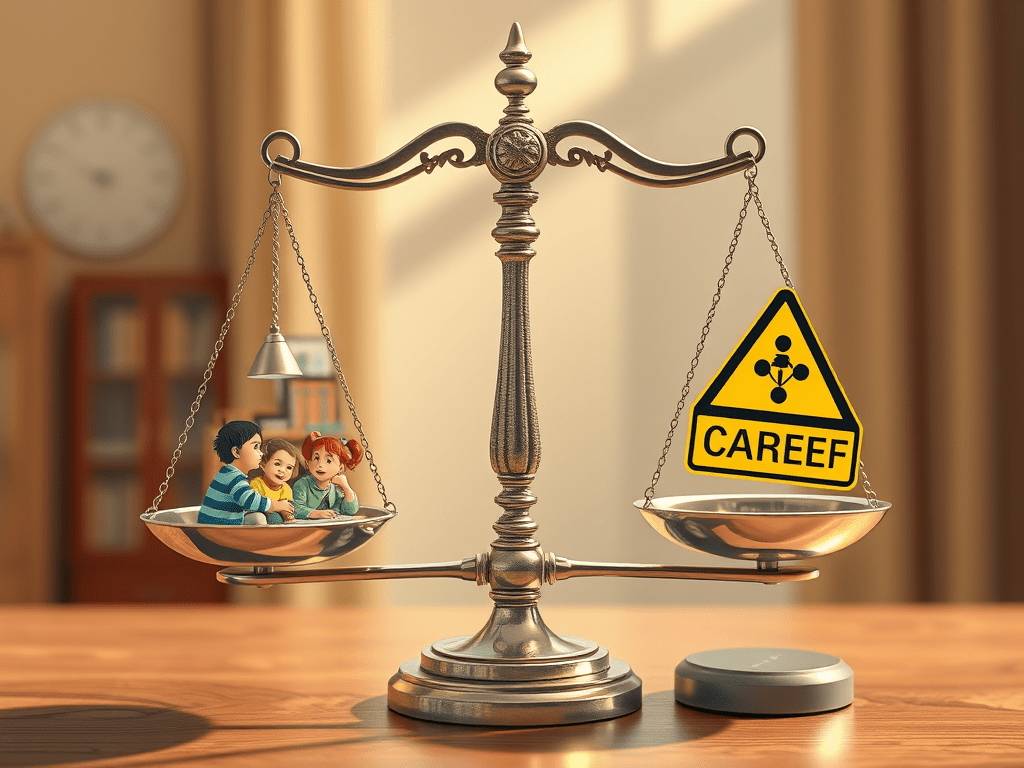

 Is A Bill Just A Bill?
Leave a comment