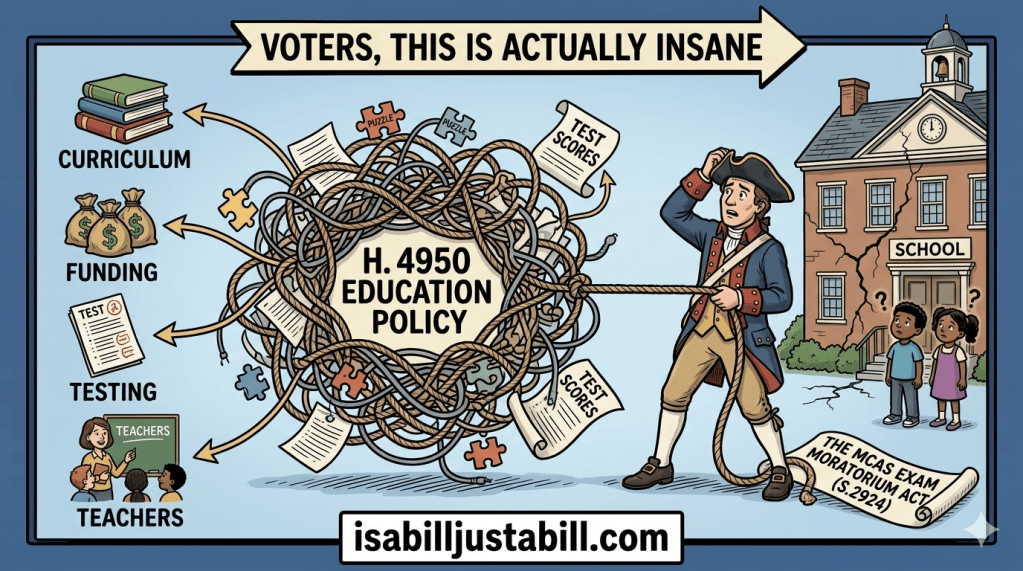
The wildly compelling political history behind your kid’s school — and why it’s all changing again
FIRST THINGS FIRST
We’ve done this before, man
Here’s the thing nobody tells you when they start talking about education reform — this isn’t new. Massachusetts has been doing this massive, high-stakes political cage fight over schools for decades. And every time, they end up cutting some wild deal where both sides walk away feeling like they won AND lost at the same time.
It’s fascinating. It’s genuinely one of the most interesting political stories I’ve come across. Sit down. Let me walk you through it.
1993
Two absolute monsters in a stalemate
Picture this. It’s 1993. You’ve got Republican Governor Bill Weld — fiscal conservative, wants schools run like businesses, the whole thing. And across the aisle you’ve got the Democrats — Senate President William Bulger and House Speaker Charles Flaherty — and these guys had a supermajority. You know what that means? They had so many votes they could override anything Weld tried to do.
And Weld and Bulger? Famously hated each other. Historians will tell you — these guys agreeing on anything seemed impossible. Just imagine two guys who cannot stand each other being forced to figure out education policy together. It’s insane.
But here’s what happened: neither side could actually pass anything alone, AND the state Supreme Court had stepped in and said, “Hey, the gap between what rich suburbs spend on schools versus what poor cities spend? That’s unconstitutional. Fix it.”
So they had to talk. And what came out of that? The Massachusetts Education Reform Act of 1993 — the most important education law in state history.
WHAT WELD WANTED
The accountability stuff
Weld basically said, “I’m not spending a dime unless we can prove kids are actually learning.” Whether you agree with it or not, that’s not an insane position. So here’s what he got:
WELD’S WINS
- —MCAS — standardized testing. You had to pass these to get a diploma. Hard requirement.
- —Charter schools — independent public schools that don’t follow local school board rules or union contracts. The idea: competition forces improvement.
- —State intervention — if a school district kept failing, the state could just take it over.
- —Business-style management — principals and superintendents got more power to hire and fire. Run it like a company.
- —Teacher testing — new teachers had to prove they could actually read and knew their subject before getting certified.
WHAT DEMOCRATS WANTED
The money and the local power
The Democrats were focused on two things: fairness in funding and keeping local towns in control of their own schools. And they absolutely delivered on both.
DEMOCRAT WINS
- —Chapter 70 Funding — the state legally committed to doubling school spending over seven years. $1.3 billion to $2.6 billion. That’s not a small number.
- —The Foundation Budget — a legal guarantee that every student gets a minimum funding floor. If your town’s poor and can’t cover it, the state pays the difference.
- —Home Rule protection — the state can test what kids know. But local towns decide how to teach it. The state cannot tell your town which books to use. Protected.
THE DEAL
Who blinked first?
Both of them, honestly. That’s what makes it a real deal.
WELD GAVE UP…
His commitment to low spending — agreed to a massive, multi-billion-dollar redistribution to help local schools.
DEMOCRATS GAVE UP…
Absolute local control — accepted state standardized testing, charter schools, and less power for school boards.
Both sides walked out getting something real. Both sides gave up something real. That’s the game.
TODAY
Now it’s 2024 and there’s a new deal being cooked
Fast forward to today and Massachusetts is doing it again. Senate Bill 2924 is all about how kids learn to read — and honestly, once you look into the science of reading it’s kind of a rabbit hole. There was a whole period where schools stopped teaching phonics and kids just… couldn’t read. Wild.
Here’s what’s in the bill:
S2924 BREAKDOWN
- $25 million Early Literacy Fund specifically for K-3 reading programs.
- Evidence-based instruction — schools must teach five research-backed things: phonics, phonemic awareness, fluency, vocabulary, and comprehension. The science on this is really solid.
- State-approved curriculum list — the state vets reading programs. They’ll even give districts a free complete curriculum if they want it.
- Universal screening — every K-3 kid gets tested at least twice a year to catch reading problems early. If your kid is falling behind, the school must notify you within 30 days and explain what they’re going to do about it.
- Waiver system — towns can still use their own curriculum, but they have to apply for a waiver, the state can audit them anytime, and they can pull that waiver if the district isn’t following the rules.
THE BOTTOM LINE
Here’s why this is actually a big deal
Remember that 1993 deal? The core promise was: the state checks the results, the local town picks the books.
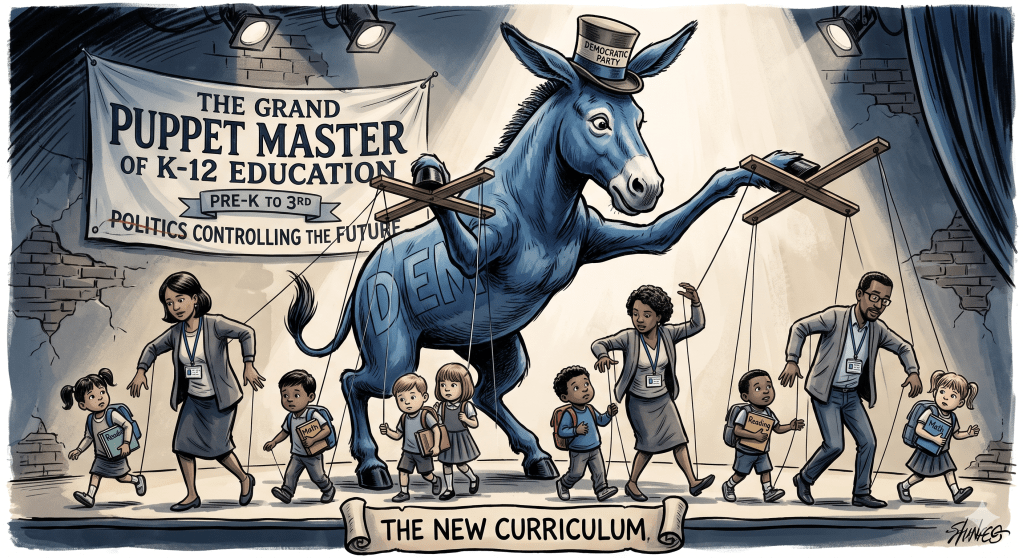
S2924 quietly rewrites that deal. Towns still technically have a choice — but now the state is deciding which teaching methods are “good enough” to be used in the first place.
They’re providing the curriculum, controlling the waiver process, and they can audit you. The state is no longer just checking if kids can read — it’s now getting involved in how you teach them to read.
Whether you think that’s good or bad probably depends on how much you trust the state versus your local school board. That’s the real question on the ballot here.
For more insights, check out:





Leave a Reply