
What’s up everybody. Let’s sit with this one.The jump from 3rd to 4th grade is one of the most revealing windows in a child’s development. This is where the shift hits hard — from “learning to read” to “reading to learn.” Social studies, science, math… everything now flows through denser, more complex text. The training wheels come off. And for teachers who have been in the classroom for years, the patterns become clear almost immediately.
Experienced 4th-grade teachers pick up on these clues in less than one quarter — often within the first 9 weeks. By then, it’s abundantly obvious which students are arriving without solid 3rd-grade literacy foundations. This isn’t subtle. The behavioral tells, the fluency gaps, the comprehension breakdowns — they show up fast once the demands increase.
And here’s the deeper reality that hits when you talk to teachers who’ve been doing this for 15+ years: this isn’t new, and it isn’t accidental. Year after year, the same story repeats. Incoming 4th graders arrive reading well below grade level. Students rarely switch schools between 1st and 4th grade, so these kids have been in the same system the entire time. Teachers know it. They see it in their own classrooms, they compare notes at lunch, and they’ve sat through the conferences and professional development sessions. The data has been there. The patterns have been consistent. This wasn’t a bug — it looks a lot like a feature of a system that has allowed large numbers of kids, especially from certain ethnic and socioeconomic backgrounds, to slip through with incomplete skills.
That reality carries heavy implications. When literacy foundations aren’t built properly — particularly with non-phonetic approaches that don’t align with how the brain actually decodes language — kids don’t just struggle in the moment. They internalize a lower ceiling on their potential. Families who aren’t steeped in reading science often assume it’s their child’s inherent limitation rather than a teaching method issue. The result? Accepted lower trajectories, reduced access to scholarships, advanced opportunities, and higher-paying paths later on. Less competition at the top. The quiet sorting continues.
Recent legislation in Massachusetts adding notification requirements for parents when kids fall significantly behind only highlights how optional that transparency was before. For years, in households without the tools or background to spot the literacy gap themselves, the system could keep moving kids forward without sounding the alarm. Teachers saw it. The data showed it. But the consistent communication to families wasn’t mandated.
The Behavioral Houdini Moves Teachers Spot Right Away
These children often know, on some level, that they’re falling behind. That awareness drives the avoidance.During independent reading: the sudden pencil sharpening, frequent bathroom trips, unrelated questions — anything to dodge sustained time with the text.In group discussions: the chameleon move. They listen closely to peers, then repackage the ideas smoothly. They sound engaged without having read the material.Some act out. Others become model-quiet, flipping pages on cue while mentally checking out. Veteran teachers recognize these patterns immediately when the material ramps up. They’ve watched them repeat across entire cohorts.
Word-Level and Fluency Signals That Light Up Early
By 4th grade, the text demands more: multi-syllabic words like atmosphere, characteristic, conservation, equivalent. Decoding weaknesses become impossible to hide.Guessing from first letters — “conservation” as “conversation,” “protest” as “protect. ”Skipping or swapping little function words — of, their, through, which — which quietly destroys sentence meaning.Robotic, flat delivery with zero prosody. They barrel through punctuation because all mental energy goes to just saying the words. Nothing left for rhythm, expression, or understanding.
The Cognitive Reality
Decoding that consumes nearly all working memory leaves almost nothing for true comprehension.Strong readers hit a “clunk” and repair it. Struggling readers just click forward, often unaware the information isn’t sticking. Literal questions might get answered by hunting on the page. Inference or main idea? It collapses. The paradox teachers know well: the verbally sharp kid who engages deeply in discussion but struggles hard on independent reading and written tasks.
What the Data Shows Semester After Semester
- Fluency scores stuck below 4th-grade targets.
- Content-area grades (science, social studies) dropping because they can’t access the texts or tests.
- Writing that remains brief, simplistic, and prompt-dependent.
This isn’t about lack of intelligence. These are bright, creative kids grinding with an incomplete toolset. Teachers see the effort — and the quiet cost to confidence, self-image, and long-term opportunity.
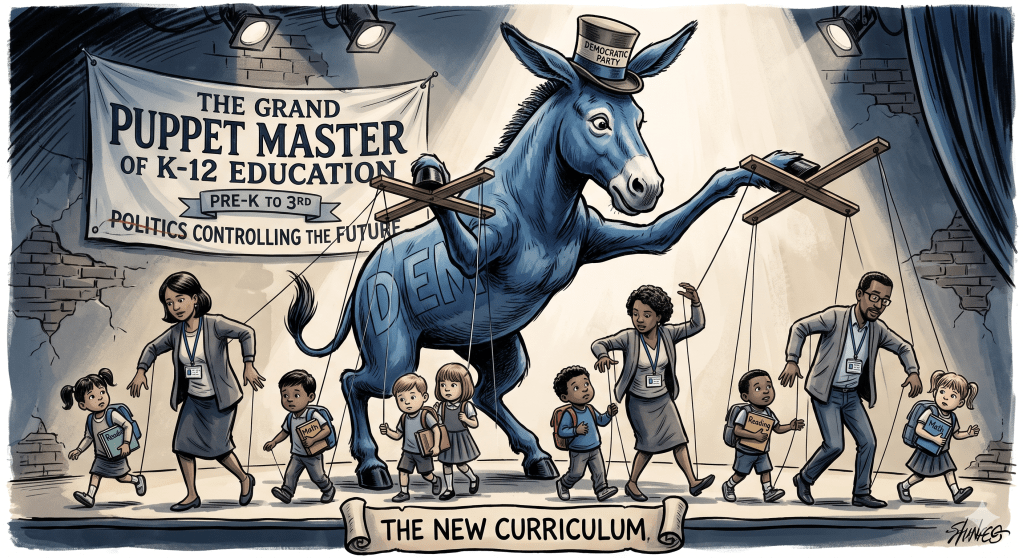
The deeper truth is what this does to a young mind. When reading feels like constant struggle and shame instead of a gateway to exploring reality, doors close early — sometimes by design of a system that hasn’t prioritized results over ideology.
Parents and teachers: if these patterns show up, push hard for structured literacy support rooted in the science of reading. Brains are plastic in 4th grade. Real intervention can still shift the trajectory.Literacy isn’t just academics. It’s the operating system for understanding the universe — and for competing in it.
Stay curious. Keep questioning the systems. Fight for these kids.
What have you seen — as a parent, teacher, or someone who’s watched this play out? Drop it in the comments. Let’s talk about it.





Leave a Reply